

Affiliate disclosure. This article contains paid links to Amazon and Walmart. As an Amazon Associate I earn from qualifying purchases. We may also earn a commission from qualifying Walmart purchases.
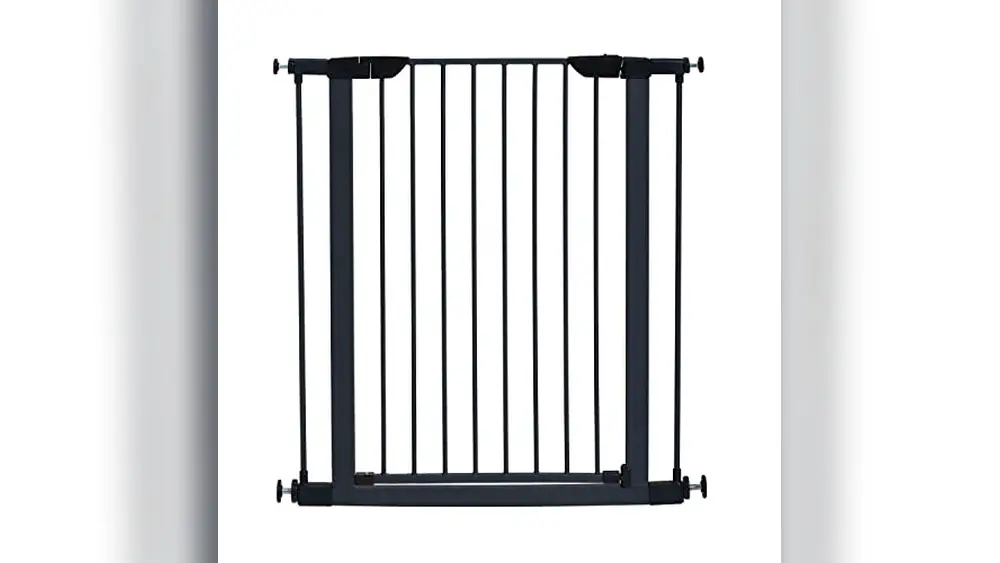
Quick answer. Choose a steel pet gate by its installed width, the space left to walk through and your dog’s behavior. The MidWest 39-inch gate offers a taller frame and a 19-inch doorway. The Regalo 1166H is 36 inches tall with a 16-inch doorway, and its included configurations fit 29–31.5 or 34–36.5 inches. Measure before choosing either model.
Retailer buttons open searches. Match the model, height, extension kit and full checkout cost.A metal frame is only one part of a useful room boundary. A gate can be made from steel and still be a poor match for an uneven opening, an escape-prone dog or a household that needs a wider walkway. This guide compares two indoor walk-through formats and explains the measurements that can change the purchase.
Our comparison uses manufacturer product information and installation documents. It is a specification-based buying guide. The fit checks below help you review the product for your own doorway and dog before ordering.
Steel pet gate comparison at a glance
| What matters | MidWest 39-inch Steel Pet Gate | Regalo Easy Step Extra Tall 1166H |
|---|---|---|
| Nominal height | 39 inches | 36 inches |
| Published width with supplied parts | 29.5–38 inches; check the extension arrangement in the manual | 29–31.5 inches without extension; 34–36.5 inches with the included 4-inch extension |
| Walk-through opening | 19 inches | 16 inches |
| Potential reason to choose | More height and a wider passage | Fits your measured range and the narrower passage works for you |
| Check before ordering | Correct height and matching extension family | The gap between the two supplied fit ranges |
See the MidWest product information and Regalo 1166H specifications for the current model details. A listing’s maximum width does not establish that every narrower opening fits. Extensions change the frame width in fixed steps, while the adjustment rods provide a limited amount of movement.
MidWest 39-inch steel pet gate for a wider walkway

The MidWest is worth comparing when the opening needs a tall frame and people will cross it frequently. Its 19-inch passage offers three more inches than the Regalo’s published doorway. Tape that width on the floor and walk through carrying the things you use most often. A laundry basket, vacuum cleaner or walking aid can make passage width more important than it first appears in a product photograph.
The manufacturer lists 29.5–38 inches with supplied extensions. Its steel gate installation manual shows the components and extension arrangements. Start with that drawing when you measure an opening near a fit boundary. Ask the maker about a particular combination if your trim or wall shape complicates the fit.
The graphite 39-inch version is commonly identified as 2939SG. Check the model number in the seller’s selected option, since the product family includes different heights and colors. Confirm the extension belongs to the same height and model family. Matching color alone is insufficient to establish compatibility.
Regalo 1166H for an opening within its two fit ranges

Regalo publishes a 36-inch height and 16-inch pass-through for the white 1166H. The included four-inch extension produces two fit intervals. A 30-inch opening falls in the no-extension interval. A 35-inch opening falls in the interval using the supplied extension. A 33-inch opening falls between those intervals and requires a different manufacturer-approved arrangement or a different model.
That distinction is useful when comparing retailer titles. A title can summarize the product as fitting up to 36.5 inches without showing the gap between configurations. Read the selected variant’s full specifications and installation document before buying. If your opening is at a boundary, measure twice at the proposed contact points and discuss the exact dimensions with support.
Consider this gate when the width works, the passage is comfortable and the height suits the dog you need to contain. The bar spacing, side gaps and clearance below the installed gate also matter. A small dog may find an opening beside the frame even when the central bars appear appropriate.
Measure a steel pet gate in five places
1. The opening at the lower mounting points
Measure between the faces where the lower mounts will meet the doorway. Skirting boards may reduce the available width near the floor. If the bottom contacts trim and the top contacts the wall above it, record those as separate measurements. Take a straight-on photo to help the manufacturer understand the difference.
2. The opening at the upper mounting points
Measure where the upper contacts will sit. Compare it with the lower figure. A tapered or out-of-square opening needs attention before the gate is chosen. The installation manual describes the acceptable assembly and adjustment. Avoid assuming the rods can make up for any difference between the two measurements.
3. The flat surface available for each contact
Check that the cups and mounting pieces can sit fully on suitable surfaces. Rounded trim, a narrow edge or an uneven decorative panel can change the installation. Find out what lies behind the surface if screws are required. For uncertain wall construction, get installation advice before drilling or tightening the gate into place.
4. The clear doorway for people
The gate’s total width is different from the doorway you can walk through. Mark the published passage on the floor and move through it with a laundry basket or your usual cleaning equipment. Check the handle’s position and the door’s swing. Include space for standing while you open and close it.
5. The gaps around your dog
Consider the bars, the latch side, the hinge side and the bottom gap. Review the smallest pet that must stay behind the barrier as well as the most athletic one. If your dog climbs, jumps or repeatedly charges a barrier, discuss a more suitable setup with the manufacturer and a qualified trainer. Height alone cannot predict containment.
Pressure mounting and wall cups need model-specific instructions
Pressure-mounted frames are common in steel walk-through gates. The words “pressure mounted” describe part of the mechanism. They do not establish whether the complete installation uses screws, cups or adhesive pads. Review the parts list and mounting instructions for the exact model and location. Keep the provided manual with the gate.
For a rented home, check the wall-cup requirements before buying. A promise in a retailer title about easy installation may leave out the details that affect your wall finish. Obtain permission for any required drilling and establish how the gate will be installed before deciding that it suits the room.
Use a gate at a stair location only when the manufacturer explicitly supports that exact placement and installation. Review the threshold, swing direction and required mounting hardware. A downstairs hallway and the top of a staircase create different installation conditions. For indoor room boundaries, our pressure-mounted gate comparison explains additional formats.
Three doorway examples before you order
A 29-inch utility-room opening. MidWest’s published minimum is 29.5 inches, so the smaller opening needs a different choice. Regalo’s no-extension range starts at 29 inches, subject to the installed dimensions and mounting requirements in its manual. Measure at the actual contact positions before placing the order.
A 33-inch hallway. Regalo’s supplied configurations leave this measurement outside their two stated intervals. Check MidWest’s extension diagram for the measured width, or ask Regalo about an approved configuration. Build the complete parts list before comparing prices so the missing accessory does not become a surprise after delivery.
A 37-inch kitchen entrance. This is above the Regalo kit’s stated maximum of 36.5 inches. MidWest’s published range reaches 38 inches with the supplied extensions. Check its diagram and mounting surfaces, then verify the selected package contains the necessary parts. For larger openings, see our extra-long gate and walkway guide.
Match the gate to everyday life with your dog
Think about what causes the dog to approach the boundary. A calm dog resting while dinner is prepared presents a different challenge from a dog rushing toward visitors. Watch the dog’s behavior at existing doors and barriers. Use that history to judge whether a gate is appropriate for the room and whether additional training or a different enclosure is needed.
For height, compare a physical measurement with the dog’s previous jumping behavior. Keep chairs and storage boxes away from the gate so they do not create a raised approach. Our pet gate height guide explains the related measurements. If you also need separate access for a smaller animal, compare a model with a dedicated pet door such as the Carlson 0941 format.
For outdoor use, choose a product explicitly rated for that environment. An indoor steel frame’s appearance does not establish its coating, fasteners or exposure limits. Our deck and patio fit guide covers an outdoor-rated alternative and its extension requirements.
Compare Amazon and Walmart by the complete package
Open the two retailer searches for your chosen model. Check the selected height, color, model number and number of gates in the package. Confirm whether the item is a full gate, an extension or a replacement part. Search results can mix these items together and display a lower accessory price alongside complete gates.
Next, compare the supplied extension sizes, wall cups and other required hardware. Include any extra approved extension in the total. Use the same delivery ZIP code, then compare shipping, arrival date and returns. Check who sells the item and who handles the return, especially when the gate and accessories come from different sellers.
Prices and stock change, so use the retailer pages to review the current delivered cost. Save the selected listing details with your receipt. Those details help if the box arrives with a different height or missing extension. Check the contents against the manual before beginning the installation.
Check the gate after installation
Follow the manufacturer’s setup sequence and confirm the latch operates as the manual describes. Walk through from both approaches, close the door and check engagement each time. Inspect the mounting points and surrounding gaps. Supervise the first uses with your dog and watch whether the pet noses the side gap, paws at the latch or leans on the frame.
Recheck the installation whenever you move the gate or notice a change in the latch. Keep the dog away from the opening while a loose or damaged part is being resolved. Contact the manufacturer for compatible replacement components. Keep the model number accessible so support can identify the correct version.
Frequently asked questions
Does a steel pet gate stop chewing?
Steel can reduce damage to the main frame, but handles, pads and other parts may use different materials. Check the complete construction. Persistent chewing or attempts to escape need attention to your dog’s behavior and the containment setup.
Will the Regalo 1166H fit a 33-inch doorway?
The supplied configurations are listed for 29–31.5 and 34–36.5 inches. Ask the manufacturer about an approved arrangement for 33 inches or choose a model whose documented configuration fits.
Which of these two gates has the wider walk-through?
MidWest publishes a 19-inch doorway and Regalo lists 16 inches. Check that the passage suits your household, including any walking aid or items you regularly carry through it.
Can I mix extensions from different brands?
Use extensions specifically approved for the exact gate model and height. Connector shape, frame geometry and mounting requirements can differ. Confirm compatibility with the maker before ordering.
Keep your opening measurements, selected model, extension arrangement and mounting requirements together. Compare complete matching packages at both retailers.