

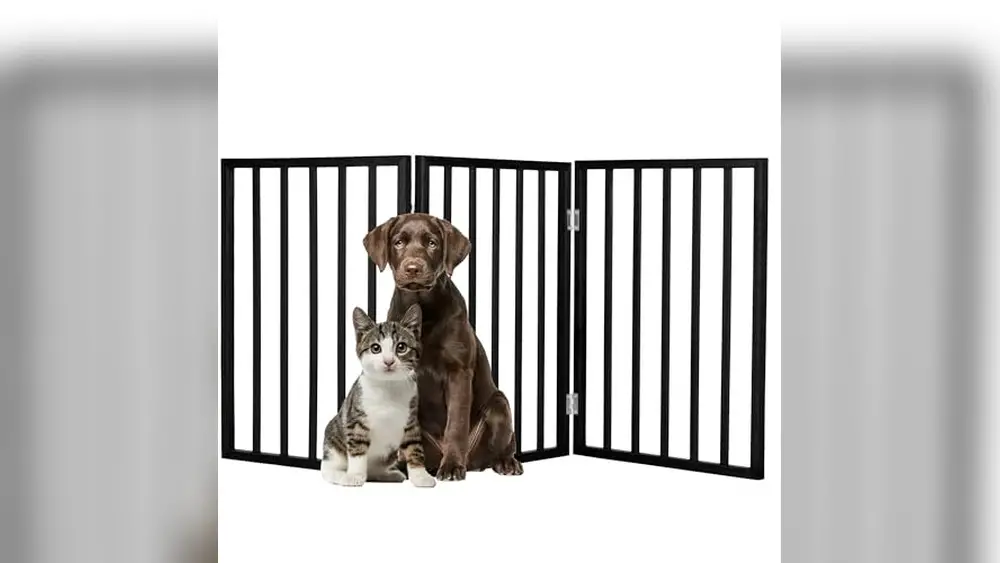
A folding pet gate with door access can make a frequently used doorway easier to cross while creating a temporary indoor boundary for a dog that respects a visual barrier. Choose a low step-over model for a quiet, occasional doorway, a model with a walk-through door for a busy route, or a heavier configurable divider if you need several room layouts. Measure both the opening and the floor space required by the folded-out panels before buying.
Affiliate disclosure: We may earn a commission from qualifying purchases through links in this guide. As an Amazon Associate, PetPotLuck earns from qualifying purchases.
Folding pet gate with door vs. a step-over gate
| Model | Good fit for | Measure or check first |
|---|---|---|
| PAWLAND 24-inch, 4-panel | Occasional step-over access and compact storage | 24-inch step-over, usable span in the approved fold, and floor grip |
| Primetime Petz 360, 30-inch | A frequent route that needs a walk-through | Door swing, panel angle, and the exact model’s span |
| Richell Convertible Elite H4, 35.8-inch | A dedicated divider with several supported layouts | 64.6–68.7 in. freestanding width and 31.7–33.7 in. depth in that setup |
This comparison uses published dimensions, retailer listings, and manufacturer instructions. For a broader overview of formats and setup, see our foldable pet gate size and setup guide. We selected the three models for different traffic and storage needs. The dimensions below describe the named variants, so compare the model number at checkout with the instructions for the unit you will receive. Any price and shipping estimate should come from the retailer at the time you order.
1. PAWLAND 24-inch 4-panel gate for occasional use
The PAWLAND is the step-over option in this comparison. Its hinged wooden panels fold for storage, making it a reasonable candidate if the gate only comes out when groceries arrive or when you need to keep a calm dog out of a work area. The 24-inch height still requires a deliberate step. Try stepping over a safe visual marker of that height before deciding that everyone in the household can use it comfortably.
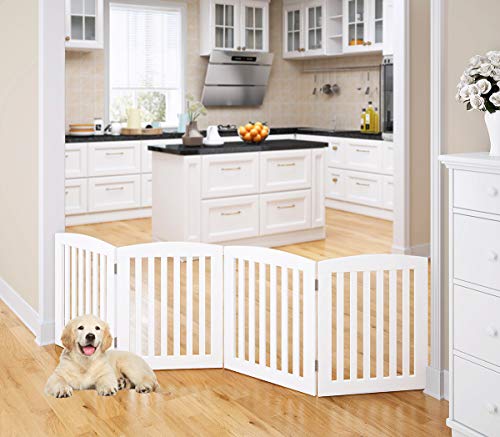
The four-panel white variant is listed at about 80 inches across when extended. Treat that as a product dimension and verify the manufacturer’s usable span for the setup you intend to use. Set a mock zigzag on the floor with painter’s tape so you can see where the outer corners land. If the footprint blocks a cabinet, catches a rug, or leaves a gap beside the wall, choose a different layout or gate type.
Look at the places you actually cross, too. A low gate may be convenient for a single person who goes through once or twice an evening, while a kitchen doorway used by several people throughout the day puts the same step in everyone’s path. A walk-through door becomes valuable when the crossing is frequent, you carry items, or someone has difficulty lifting a foot over the panel.
2. Primetime Petz 360, 30-inch for a busy room
The 30-inch Primetime Petz 360 listing describes a freestanding hinged gate with a walk-through door. That makes a meaningful difference where the gate stays out for long periods. Mark the door swing in both directions before buying. In a tight hall, nearby furniture or a rug can leave one swing direction useful and the other awkward. Also check that you can reach the latch comfortably from both sides.
Check the manual for the exact item on the carton. The manufacturer’s instructions for the 33232 Z-fold configuration specify a maximum span of 72 inches. The Primetime Petz 360 family includes different sizes and configurations, so use that figure only when the manual matches the item you are buying. For a wall-to-wall opening close to the stated limit, measure at the points where the ends will actually rest.
A pet can still press an end panel sideways or use a nearby chair as a route around the barrier. Watch your dog around the gate while you are in the room, especially when a delivery arrives or someone passes on the other side. If the gate shifts, the panel or door starts to flex, or the dog repeatedly tests the end gap, choose a mounted gate that is suitable for that opening and your dog’s behavior.
3. Richell Convertible Elite H4 for a configurable divider
The Richell Convertible Elite H4 manufacturer specifications list three configurations for model 94198: freestanding gate, room divider, and pen. In the freestanding configuration, the listed width is 64.6 to 68.7 inches and the depth is 31.7 to 33.7 inches. The published 25.6-inch door opening gives you a separate measurement for actual passage. A wide gate can still feel narrow if you regularly carry bins through it.
The H4 weighs 44.4 pounds according to Richell, so choose it for a more permanent spot where its depth and door are useful every day. The manufacturer says to remove the locking caps before moving the panels. That step matters if you planned to fold away the gate after every meal. The simpler PAWLAND layout is easier to evaluate for that routine, provided the step-over and fit work for everyone.
Richell lists different wire spacing and dog size recommendations across its configurations and versions. Read the instructions for your exact model and look at the real gaps around the panels, under the door, and at both ends. If your pet can put its head through a gap, choose a setup with smaller openings and check it again after adjusting the panels.
How to measure for folding pet gates
Start with the real opening. Measure between the surfaces where the ends will sit, including baseboards and trim. Record the narrowest floor-level measurement as well as the width higher up if a wall flares or furniture protrudes. Take a photo of any side where the gate has to angle around an obstruction. Our guide to an extra-long pet gate with a door walks through the additional clearance a wide setup needs.
Map the footprint. Use painter’s tape to mock up the panel shape and check the manufacturer’s allowed angles. A sharper zigzag takes more floor space and covers less width. If there is a door in the gate, tape out its swing and stand on each side to simulate reaching the latch. The depth measurement is especially important where the gate will share space with a cabinet, HVAC register, or regular walking route.
Account for flooring transitions. One foot on carpet and another on tile can change how a gate sits. Check for gaps above the floor, and use the manufacturer’s feet or supports for the model. Keep its base clear of thick rug edges and loose mats that could shift when somebody opens the door. Recheck the setup after moving the gate from one opening to another.
Measure storage as well as setup. Find a place where the folded panels can sit without tipping onto a busy path. Compare folded width, depth, and height with the closet or storage slot, including handles and support feet. If a gate needs to be carried up and down stairs when stored, factor that into the model choice, even if you use the gate itself only on level ground.
Watch actual use. Try the walking path with a laundry basket before relying on the gate every day. Then supervise a few ordinary separations and see how your dog responds. Frequent nudging, chewing, jumping, or repeated attempts to slip through an end gap tell you more about the fit than the dog’s weight alone.
A worked example for a 60-inch opening
Suppose the opening measures 60 inches at the baseboards and 61 inches at handle height. There is a cabinet 17 inches inside the room and people pass through the opening several times every evening. Start with 60 inches as the target width. Mark the cabinet swing and measure how much depth remains when the door is open. A model listed at almost 32 inches deep in freestanding mode would need a different spot if that footprint blocks the cabinet.
Next, rule out layouts that make the household step over the barrier on every trip. For each walk-through model you are still considering, mark the door on the floor and open the cabinet again. If the two overlap, check if the gate can face the other way within its instructions. Keep an easy route out of the room. For a tight opening with very little depth, a suitable mounted gate can preserve more of the usable floor.
Finally, write down the exact dimensions and variant as a shopping note. Include the minimum opening width, available depth, required passage width, and your preferred door direction. Compare those figures with the product manual before ordering. This takes a few minutes and can spare you a return trip with a bulky box.
When a mounted gate makes more sense
A folding gate can be useful for an occasional boundary in a level room with an adult present. For stairs, use only a gate the manufacturer specifically approves for that location and follow its mounting instructions. For regular pushing or bolting through a doorway, look for a suitable mounted model and check both the installation requirements and latch operation. Read our pressure-mounted pet gate comparison for level doorways that can accommodate that design.
If the main concern is a climbing cat, consider height, climbable rails, side gaps, and the room layout together. A chair or console beside the gate can undermine the extra height. See the extra-tall pet gate fit guide for cats for more on doorway gaps and alternate setups.
Frequently asked questions about folding pet gates
Can a folding pet gate stand straight across a room?
Follow the manual. A freestanding panel gate may need a zigzag, feet, or a particular locked angle for its approved setup. A fully straight line can use more of the panel length while providing less stability for designs intended to stand in a fold. Measure the layout specified by the manufacturer.
Should I choose a walk-through door or a step-over gate?
Choose a walk-through door for a route you use often or when a high step would make the crossing awkward. A step-over gate works best when crossings are infrequent and everyone who uses the opening can cross it comfortably. For a door model, check the passage width and swing as well as the total width.
Can I compare Amazon and Walmart prices directly?
Compare exact models, panel counts, colors, and heights before comparing the final price. Also check shipping costs, the seller, and the return policy. The buttons in this guide lead to different models, so use them to compare setups and verify current availability before ordering.
Which gate should you choose?
Choose the PAWLAND for occasional step-over use, the Primetime Petz for easier passage, or the Richell H4 if you have room for a heavier divider and will use its different configurations. Mark the floor first and compare your width, depth, and swing measurements with the manual for the exact model.