

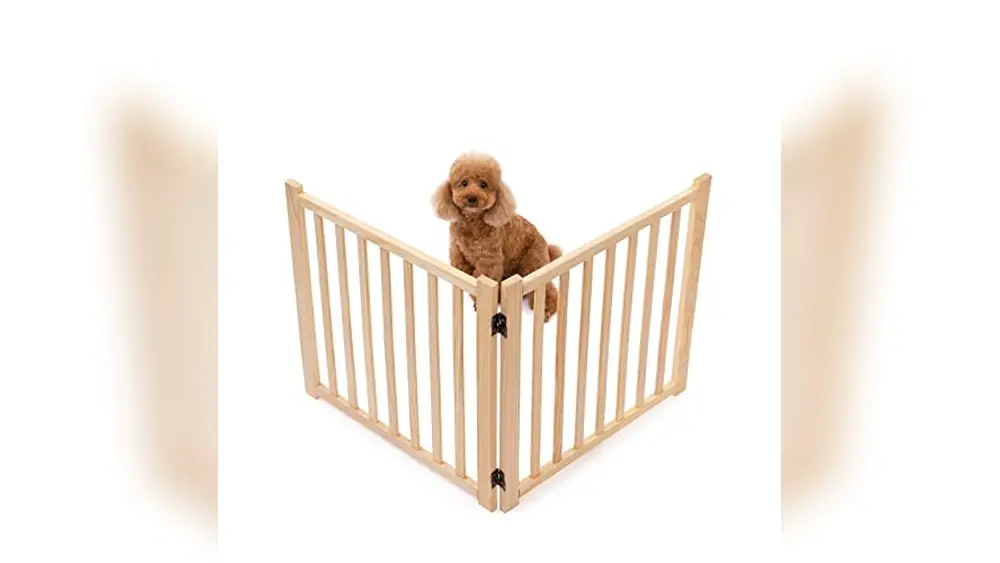
Measure first. Choose the gate second.
To measure for a freestanding pet gate, record the opening width, usable floor depth, required barrier height, and clear walking route. Then compare those measurements with the exact model’s approved assembled configuration. The length of a folding gate laid flat is not a reliable measure of the opening it can block while standing correctly.
Affiliate disclosure: As an Amazon Associate, we earn from qualifying purchases. We may also earn a commission through Walmart links.
A freestanding gate can look like a perfect fit in a product photo and still get in the way at home. The opening may be wide enough, but its support feet can sit across your walking route. A door may swing straight into a side panel. Or a folding screen may reach both walls only when it is stretched into a position the instructions do not allow.
This guide explains how to measure for a freestanding pet gate before ordering. It focuses on planning and fit rather than naming one universal winner. Use the worksheet, work through the room layout, and keep the manufacturer’s instructions beside you when comparing listings.
Editorial note: This is a research-based measuring guide, not a hands-on product test. Product examples below use manufacturer specifications checked on November 23, 2026. We have not verified live retailer prices, stock, or every finish and size variation.
Your freestanding pet gate measuring worksheet
Use a tape measure and a notebook or phone note. Draw the opening from above, including the door, furniture, and the route people take through the room. Label every number with its unit. Mixing inches and centimeters is an easy way to choose the wrong size when comparing different retailers.
| What to record | Your measurement | What you compare it with |
|---|---|---|
| Opening at floor level | _____ inches | Usable assembled width and end gaps |
| Opening at middle and top | _____ / _____ inches | Changes caused by trim, posts, or angled walls |
| Available floor depth | _____ inches | Full support-foot or side-panel footprint |
| Barrier height | _____ inches | Exact model height and your dog’s behavior |
| Clear walking passage | _____ inches | Walk-through door opening, if provided |
| Storage space | _____ W × _____ D × _____ H | Folded dimensions and lifting practicality |
These are planning notes, not universal installation tolerances. There is no single extra allowance that works for every gate. Follow the selected product’s stated opening range and assembly rules. If a listing gives overall dimensions but does not explain the usable opening, ask the manufacturer before ordering.
How to measure for a freestanding pet gate: six checks
1. Measure the opening where the gate will actually stand
Start with the exact boundary you want to create. A doorway measured inside its decorative trim is different from a screen positioned in front of that doorway. Mark the proposed gate line on your drawing before measuring. Otherwise, you may compare an opening measurement with a product that needs to sit somewhere else.
Measure across the floor, then repeat around the middle and expected top of the barrier. Record each result rather than automatically keeping only the widest or narrowest number. A baseboard can reduce the space available for support panels while leaving more room above it. An angled post can create an end gap even when the front panel appears wide enough.
For an irregular opening, photograph the area and show the supplier the measurement points. Include the baseboard, any radiator, and the direction the room door opens. A clear photo and a labeled sketch are more useful than asking whether a gate “fits a standard doorway.”
2. Measure the entire footprint, including side supports
The most easily missed dimension is depth. Freestanding designs may use projecting feet, return panels, or an angled arrangement to stand. Measure usable floor space on both sides of the proposed barrier. A sofa, cabinet, or doorstop can prevent a support from sitting where it belongs.
Use removable markers to outline the proposed footprint on the floor. Keep markings flat and remove them after checking; do not leave loose objects across a walkway. Then walk through the area normally. Consider what happens when someone carries groceries, uses a walking aid, or enters in low light.
A gate that technically fits may still be a poor layout choice if everyone must sidestep its supports. Moving the barrier line farther into the room may help, but remeasure the opening at that new position. Do not remove feet or fold supports inward just to squeeze the gate into a smaller space.
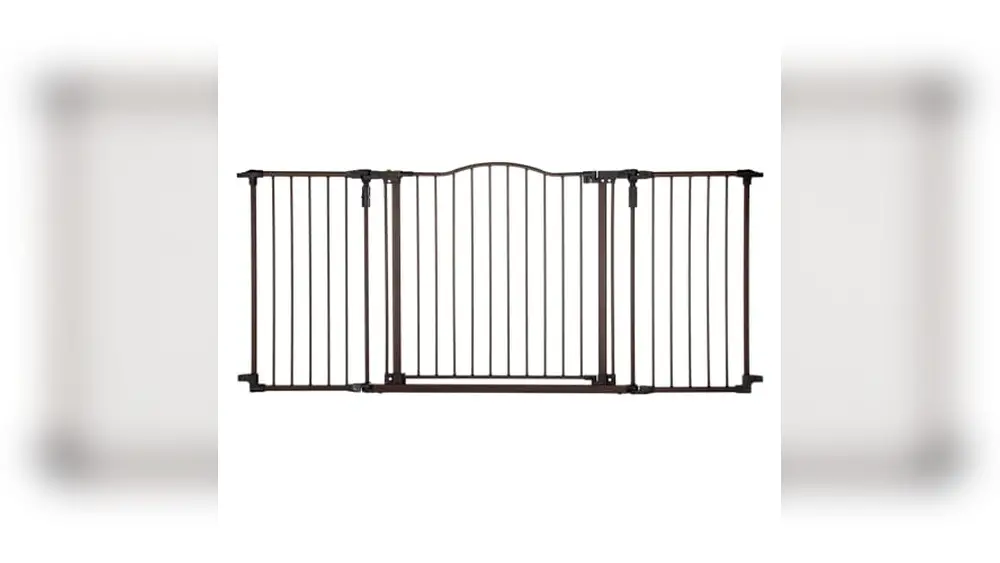
3. Separate folding-panel length from usable blocking width
Think of a folding screen as a shape rather than a straight measuring stick. Angled panels use some of their length to create depth. A retailer may emphasize the unfolded length, while the manufacturer describes a smaller span for the standing configuration you need.
Richell’s own FAQ illustrates this distinction: it lists its Convertible Elite 4-Panel at 64.5 inches in the freestanding configuration and 91.7 inches as a zig-zag room divider. Those numbers describe different arrangements, not interchangeable width limits. Check the manufacturer’s configuration explanation.
Before ordering, look for a drawing showing the arrangement that matches your room. If the only measurement you can find is the sum of all panel widths, treat fit as unresolved. Do not assume you can straighten a folding gate to its full length and retain its intended stability.
For more on choosing the mechanism, compare our foldable pet gate guide. For wood-frame options specifically, use the wooden freestanding pet gate comparison after finishing your measurements.
4. Check height and gaps against the individual dog
Record the gate’s actual barrier height, not the height of packaging or a decorative end post. Then consider your dog’s behavior. A calm dog that respects a visual boundary presents a different challenge from a dog that jumps when someone rings the doorbell. A taller barrier is not automatically suitable for a stronger or more determined dog.
Inspect the proposed end gaps and the spacing between bars or slats. Do not test suitability by encouraging a dog to push its head through an opening. If you cannot establish that the gaps suit your pet, request advice from the manufacturer or choose another design. A puppy’s current size also does not tell you whether the same setup will suit it later.
Keep furniture away from the barrier if it could give your dog a platform to climb from. Avoid placing the gate beside objects that can be pulled through. If your main concern is height rather than portability, read our extra tall freestanding pet gate guide, including its limitations.
5. Measure door swing and usable human access
Open the room door through its normal arc while planning the gate position. Check whether the handle, door edge, or closer would hit a panel. Repeat the check for nearby cabinet doors. A gate positioned neatly while everything is closed may become an obstruction during ordinary use.
If the gate has a walk-through door, record the clear passage width separately from its overall width. A wide barrier can still have a comparatively narrow door. Think about laundry baskets and other items you routinely carry, rather than judging access from a product photograph.
If the model requires stepping over, consider whether that is practical for everyone in the home. Do not plan on climbing over while holding a pet or carrying bulky items. A walk-through design may be a better choice where access is frequent, even if the gate costs more or needs a larger footprint.
6. Check the floor and storage location
Look at the surface beneath every support point. A rug edge, threshold strip, uneven tile, or deep carpet can change how the gate sits. Do not assume a gate positioned on two different surfaces will behave like one placed on a flat showroom floor. Use only the setup and accessories allowed by the manufacturer.
Measure where the gate will be stored as well. Check folded width, depth, height, and whether it must be lifted through a narrow closet door. If storage involves moving it upstairs or reaching overhead, consider a different location or a more manageable model.
Keep pets out of the work area during assembly and folding. Before using the gate, check that all specified fixings and supports are present. Recheck the setup after moving it. If it starts sliding or falling, stop relying on it and work through our freestanding gate stability checks.
Three manufacturer examples: why every dimension matters
The examples below show how width, depth, and access differ within one brand. They are reference points for reading specifications, not recommendations for every dog. Check the model number and current manual before comparing a retailer listing.
| Model example | Manufacturer’s opening range | Height / depth listed | Measurement lesson |
|---|---|---|---|
| Richell Freestanding Pet Gate Large | 39.8–71.3 inches | 20.1-inch height; 17.7-inch depth | The word “Large” describes the model; check pet suitability separately. |
| Richell Freestanding Pet Gate HL | 39.4–70.9 inches | 27.6-inch height; 23.6-inch depth | The taller example also needs a deeper footprint. |
| Richell Wide Premium Plus | 55–84 inches | 32-inch height; specification lists 20.5–26-inch depth | Check the chosen side-panel position and door access. |
Sources: Freestanding Large, Freestanding HL, and Wide Premium Plus. The Wide Premium Plus page rounds its opening range differently from its overall dimension line; use the installation instructions to confirm boundary cases.
A useful comparison starts with the complete size line, not the biggest number in the product title. Match the selected finish and size to the manufacturer’s model number. If the retailer combines several variations on one page, recheck the dimensions after selecting an option.
A worked example for a 60-inch room opening
Imagine your measured boundary is 60 inches wide. You have enough space for a screen across the opening, but the walking route is close to one side. That single width measurement is enough to begin a shortlist; it is not enough to place an order.
First, mark where the supports would sit for each candidate. If the required depth crosses the walking route, reject that layout or choose a different gate position. Next, compare the clear passage through any gate door with the items you carry. Finally, check the selected model’s pet-size guidance and permitted assembly arrangement.
Do not choose the widest model simply because 60 inches falls below its maximum width. Its minimum usable width, support angles, and end gaps still matter. The better choice is the model whose approved configuration matches your room and pet, with clear access for the household.
Compare Amazon and Walmart after checking fit
Once you have a suitable model, compare the same size, finish, and model number across stores. These links open retailer search results, not a guaranteed matching product page. Verify the selected item before checking out. We are not displaying a live price or claiming either store is cheaper.
Compare models on AmazonCompare models on Walmart
- Match the configuration: freestanding, room divider, and pen photographs can show different layouts.
- Check what is included: support feet, panels, and doors may differ between packages.
- Read return conditions: check the seller’s requirements for opened or assembled products.
- Compare the total: include delivery and any required manufacturer-approved accessories.
- Save the model number: it helps confirm the correct instructions and replacement parts later.
If the seller cannot confirm a missing dimension, pause the purchase. A clear answer about usable width or support depth is more valuable than a discount on a gate you cannot position correctly.
Frequently asked questions
How wide should a freestanding pet gate be?
Choose a model whose approved assembled configuration suits your measured boundary. Do not use the unfolded length alone. Check end gaps, support depth, and the instructions for the exact arrangement.
Should I add a few inches to my doorway measurement?
There is no universal extra allowance. Record the actual opening and compare it with the manufacturer’s usable opening range and setup drawing. Ask about unclear dimensions rather than adding an arbitrary amount.
Can I use a freestanding pet gate at the top of stairs?
Do not use a freestanding screen as a fall-protection barrier at the top of stairs. Use a product explicitly approved for that location and install it as directed. Richell’s Small/Large instruction manual specifically prohibits top-of-stair placement.
Does a wider gate need more floor space?
It can, depending on the design and panel arrangement. Measure the complete footprint rather than assuming width and depth change together in a predictable way.
What if my gate fits but keeps moving?
Stop relying on it until you check the instructions, floor surface, fixings, supports, and your dog’s behavior. Moving the gate or changing the barrier type may be necessary. Do not improvise braces that introduce a new hazard.
Will a freestanding gate contain a cat?
Do not assume so. A cat may jump or climb a barrier intended for dogs. Choose an arrangement suitable for the individual animal and the reason you need separation.
Final buying check: Write down the opening, footprint, height, passage width, and model number together. If any of those is still unknown, resolve it before purchasing. For detailed wood-frame comparisons, continue to our three-model wooden gate guide.
Additional references: Richell configuration FAQ and Freestanding Small/Large instruction manual. Follow the manual supplied with your exact product.