

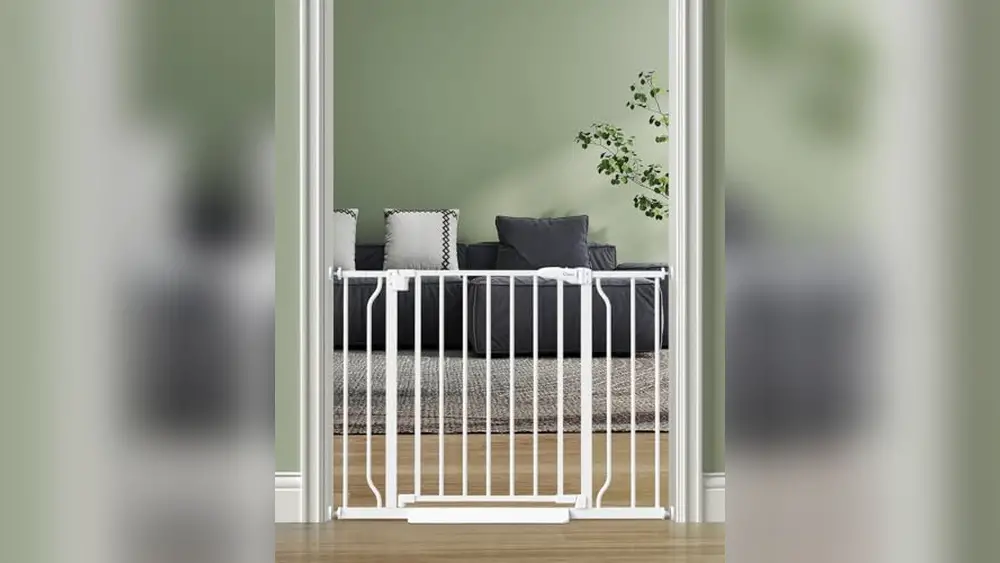
Affiliate disclosure: As an Amazon Associate, PetPotLuck earns from qualifying purchases. Amazon buttons below open search results for ready-made alternatives, not a quotation for a custom-built gate.
Custom pet gates: buy the right fit before choosing the finish
A custom pet gate makes sense when your opening, mounting surfaces or daily routine cannot be served well by a standard gate. Start with the opening and your pet’s behavior. A beautiful finish cannot compensate for an unstable installation or a gap your dog can squeeze through.
Quick answer: Choose made-to-measure construction for a genuinely unusual opening or a specific architectural finish. Choose an approved adjustable or modular gate when a standard system already meets your measurements. Get a written drawing and mounting plan before paying for a bespoke order.
Compare ready-made mounted gatesCompare folding alternatives
What “custom pet gate” actually means
The term covers several different products. A made-to-measure gate is fabricated to an agreed size, often with choices of material, finish and hardware. An adjustable gate uses an existing design that expands within a stated range. A modular system joins approved panels to follow a wider or angled layout. These approaches solve different problems, even when sellers use similar descriptions.
Ask which parts are genuinely custom. Changing a color or adding a standard extension does not necessarily change the gate’s height, bar spacing or latch position. If those details matter, put them in the drawing. Also establish whether the maker is supplying a finished barrier, an unfinished woodworking component or a full installation service.
This is a purchasing and planning guide, rather than a hands-on product test or a construction specification. There is no single best custom gate for every household. Our recommendations below are based on fit, published manufacturer information and the questions that help prevent an unsuitable order.
Three buying routes worth comparing
1. Made-to-measure wood: for an architectural match
Consider a specialist wood shop when the gate needs to match interior trim or an unusual opening. Vintage Doors advertises custom solid-wood pet gates and room dividers. Treat its range as a starting point for a quote: confirm the finished dimensions, hardware and intended installation directly with the maker.
Good fit: A permanent interior project where appearance and an agreed drawing matter. Trade-off: Finishing, installation and changes after manufacture may add work. Ask how the selected wood and finish suit the actual room conditions.
View the maker’s custom wood range — manufacturer link, not an Amazon affiliate offer.
2. Made-to-measure metal: for a specific opening and layout
A metal fabricator can be worth considering when you need an agreed frame, latch location and finish. Made Gates describes made-to-order steel interior dog gates. Ask for a drawing that includes the mounting arrangement and the clearance beneath and beside the gate, rather than approving a photograph alone.
Good fit: A permanent interior boundary with suitable supporting surfaces. Trade-off: Weight, delivery and installer access deserve attention. Metal construction does not itself establish that a gate will contain a determined jumper or climber.
Explore made-to-order steel options — confirm current specifications and terms with the supplier.
3. An approved modular or adjustable alternative
Compare a standard system before commissioning fabrication. Cardinal Gates’ 4PG is a freestanding, folding pet gate with an optional 4PX extension. Its maker requires an angled configuration and says it is not a baby gate. That makes it a configurable pet barrier, rather than a bespoke hinged doorway gate.
Good fit: A supervised room boundary where the specific product and your pet’s behavior are compatible. Trade-off: Floor footprint and stability matter. Do not calculate usable width by simply adding every panel length while ignoring the required angles.

Custom, adjustable or freestanding: compare the trade-offs
| Route | Main reason to choose it | What to verify |
|---|---|---|
| Made-to-measure hinged gate | Specific size, finish and hardware layout | Drawing, support structure, clearances and order terms |
| Adjustable mounted gate | A standard model fits the opening | Exact width range and approved mounting method |
| Modular mounted system | Wide or angled room division | Approved panels, joints and anchor locations |
| Freestanding folding gate | Relocation and no permanent wall fixings | Required configuration, footprint and pet behavior |
| Retractable gate | The barrier needs to retract when open | Mounting layout, width and mesh suitability |
Measure the opening before requesting quotes
Record the width near the floor, around the planned latch height and near the proposed top. Keep all three measurements. An older doorway may not be square, and a single center measurement can hide a taper. Tell the supplier where each measurement was taken rather than supplying only the smallest number without context.
Next, record the baseboard height and projection on both sides. Photograph the full opening and close-ups of each side. Include a ruler in detail photographs if it helps show the obstruction, but use written measurements as the reference. Baseboards can affect whether a frame sits flush and where brackets can be positioned.
Describe the wall or jamb construction as accurately as you can. A trim face is not automatically a suitable structural fixing point. Ask the maker or installer to confirm the support required for the actual gate and hardware. Do not substitute generic anchors for the specified installation simply because they came in a separate household repair kit.
Measure the space on both sides of the opening, too. A gate may fit when closed yet hit furniture, a door handle or a wall when open. Mark the intended swing arc with removable tape and walk through the route while carrying the objects you usually carry. Laundry baskets and pet food bags reveal awkward layouts quickly.
Specify the pet, not just the doorway
Tell the supplier about every animal expected to use the area. A design that holds back a calm adult dog may have unsuitable gaps for a puppy. In a mixed household, a small pet opening may also let the dog you intended to exclude pass through. Decide which animals should cross the boundary before selecting that feature.
Height is only one part of containment. Describe jumping, climbing, chewing, pushing and squeezing behavior honestly. Horizontal features can offer footholds, while a gate that can be nudged around is a poor match for a persistent pusher. No ordinary pet gate should be assumed to be escape-proof because it looks substantial.
Ask the maker to show all relevant gaps on the drawing, including the spaces beside hinges and latches and beneath the bottom rail. Check how those gaps change when the gate moves. Avoid choosing a universal gap number from an unrelated product: the design must suit the animal and the intended use.
A quote checklist you can send to a maker
Provide a short written brief with the opening measurements, photographs, intended location and pet details. State whether the gate should swing inward, outward or both ways, and identify any existing door that shares the space. Ask the supplier to flag missing information before preparing the final drawing.
- Finished gate dimensions and the opening dimensions used to calculate them.
- Frame, hinge and latch details, including their positions and operating method.
- Mounting surfaces, required backing and who supplies each fixing.
- Bar spacing, bottom clearance and any small-pet opening.
- Material, finish, care instructions and indoor or outdoor suitability.
- Delivery charges, installation scope, lead time and order-change terms.
Compare quotes against the same brief. A lower headline figure may exclude finishing, mounting hardware or installation. A higher figure may include a site visit and a checked installation. Ask for those differences in writing so the comparison reflects the completed project rather than the gate panel alone.
Plan the latch around everyday use
A gate that is awkward to operate is more likely to be left open. Check whether adults can reach and operate the latch comfortably, including anyone with limited grip or mobility. Ask for a demonstration or a clear operation video. “One-handed” in a description does not tell you whether the movement suits your household.
Decide how visitors will use the gate. A subtle latch can confuse guests, while a latch accessible to a clever pet may undermine the boundary. Keep the operating instructions simple and place them where the people who need them can find them. Recheck that the latch engages after each closing during the initial adjustment period.
Consider the open position as carefully as the closed position. The panel should not block a frequently used route or create a new obstacle by a doorway. For people who need a clear walking path, discuss thresholds and floor projections before ordering. Do not plan to step over a tall gate as the routine access method.
Materials, finishes and cleaning
Choose a material for the location and maintenance you can realistically provide. Wood can suit interior finishes, but the supplier should explain its cleaning and refinishing requirements. Painted or coated metal also needs care appropriate to its finish. A durable-looking surface is not a reason to ignore damage or loose hardware.
For a kitchen boundary, ask how to remove ordinary splashes without damaging the finish. For a damp utility area, explain the conditions before requesting material advice. Outdoor exposure requires an explicitly suitable product and hardware; an interior gate should not be moved outside merely because it is made of metal.
Use the manufacturer’s cleaning instructions and keep moving parts clear of fur and debris. Inspect the gate during normal cleaning so small changes are noticed early. If a latch starts sticking or a fixing moves, stop relying on the barrier until the cause has been corrected rather than forcing the mechanism closed.
Delivery and installation checks
Before delivery, confirm how the gate will enter the property and who will move it to the installation area. Ask whether the item arrives assembled and whether packaging removal is included. For a custom order, retain the approved drawing and order confirmation so the delivered item can be checked against the agreed specification.
Inspect for damage before installation where practical, following the seller’s reporting procedure. Check the supplied hardware against the installation instructions. Have the installer resolve any mismatch in support, alignment or dimensions before drilling. Improvised spacers and substituted latches can turn an otherwise appropriate design into a different, unverified setup.
After installation, operate the gate several times without pets nearby. Check the full swing, latch engagement and mounting stability as instructed by the maker. Then introduce the boundary calmly under supervision. If your pet tries to climb or force it, reassess the setup instead of leaving the animal alone to test it.
When a standard gate is the better purchase
A standard model is worth choosing when its published dimensions and mounting instructions already fit your opening. It may be easier to compare replacement parts, installation documents and return options. Spending more on custom fabrication is useful only when it solves a real fit or design requirement.
For an entrance where storage space matters, read our retractable front-door gate guide. For a movable room boundary, compare the limitations in our Richell freestanding gate guide. If a supported extension is enough, use the Carlson extension compatibility guide rather than mixing unrelated parts.
Frequently asked questions
Are custom pet gates safer than standard gates?
Customization can address fit problems, but it does not automatically establish safety. The design, support, installation, gaps and pet behavior all matter. Ask what intended use the maker supports and what documentation is available.
Can I use a custom pet gate as a baby gate?
Do not assume so. Pet gates and child safety gates can have different requirements. If children need protection, choose a product specifically intended and documented for that purpose and location.
Should I order the exact width of my doorway?
Send the measured opening to the maker and let the supplier specify the finished size and allowances. Hinges, posts, latches and installation clearances affect the actual gate dimensions.
Can a freestanding gate span a wide opening?
Only within its supported setup. Folding systems may require angles for stability, so the sum of their panel lengths is not the usable straight-line coverage. Confirm the installed configuration before purchase.
Can I return a made-to-measure gate?
Check the seller’s current written terms before ordering. Bespoke products may have different cancellation, change and return conditions from standard stocked items. Resolve measurement responsibility and damage-reporting procedures in advance.
What should I buy first?
Start with a measurement brief and a comparison of supported standard options. If those cannot meet your requirements, request a custom drawing and full project quote. Avoid buying separate hardware before the maker confirms compatibility.
Make the next step a fit check
Choose the route that matches your opening and your pet. Compare ready-made choices first, or take your measurement brief to a custom maker if standard systems cannot meet it.
Editorial sources checked October 15, 2026: Vintage Doors custom range, Made Gates and Cardinal Gates 4PG specifications. Model information can change; confirm current documents and order terms before buying. No hands-on testing, pricing or escape-proof performance is claimed.