

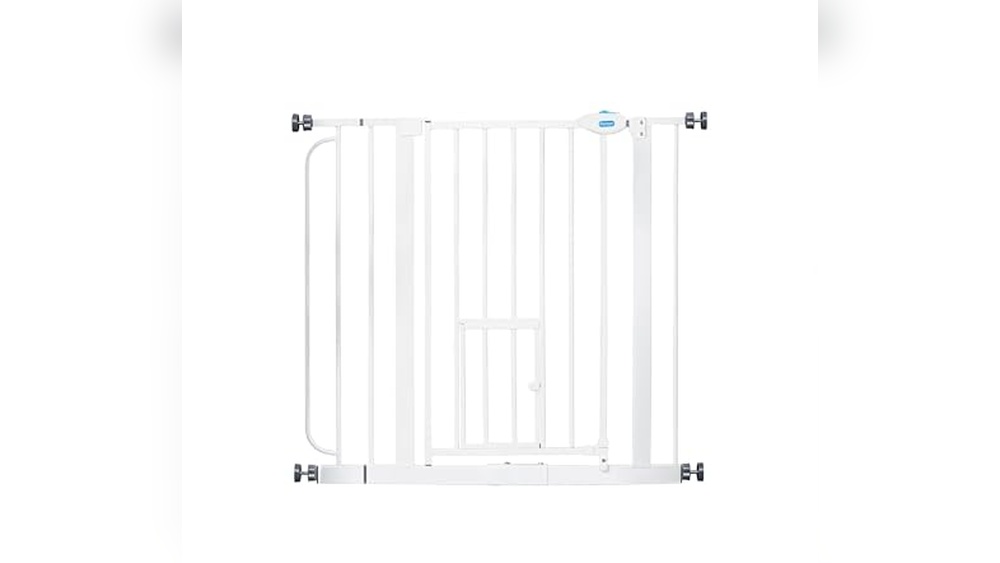
To find the correct Carlson pet gate instructions, identify the full model number on your gate or packaging and match it to Carlson’s official manual directory. Do not install a gate from a similar product photo or a generic shopping description. Different models and revisions can use different parts, mounting requirements and latches.
This guide helps you find the right document, check the opening, organize installation, and investigate common fit or latch problems. The worked reference is the current official manual for the 0930 B DS / 0930 PW DS Extra Wide Pet Gate. Use your own gate’s matching instructions for the actual assembly.
Start here: download your model’s official manual
Open Carlson’s official instruction manualsFind your complete model number in the directory, open its PDF, and compare the cover and parts diagram with your gate. Keep the PDF available throughout setup.
Important for the current 0930 DS manual: wall cups are required, and the warning section prohibits top-of-stairs use. A pressure-mounted description does not make required hardware optional. Older documents online can give different guidance; if the document or supplied parts do not match your gate, ask Carlson to identify the correct revision before proceeding.
Affiliate disclosure: As an Amazon Associate, I earn from qualifying purchases. The optional Amazon link below is a search link, not a confirmed replacement-part match. The official manual and support links are not affiliate links.
1. Identify your Carlson gate before choosing instructions
Write down the model exactly as printed, including letters and suffixes. Keep a photograph for your records. A title such as “extra wide,” “extra tall” or “walk-through” describes a style, but it does not uniquely identify the assembly you have.
Check the packaging and any label on the gate. If the model is missing or unreadable, collect photographs of the complete frame, latch, hinges, small pet door and existing mounting components. Carlson support may be able to identify the product from those details; do not guess a model simply because its color looks similar.
Make a small setup record with four items: model number, opening measurements, included components and the PDF you intend to follow. This keeps the information together when you need to compare a part or ask a question later.
| Directory entry | What to match | What not to assume |
|---|---|---|
| 0930 PW DS / 0930 B DS | Extra Wide model, full suffix and the corresponding PDF cover. | That every 0930 revision uses identical assembly or warnings. |
| 0941 PW DS | Extra Tall model and its own manual. | That instructions for the shorter gate are interchangeable. |
| Other Carlson models | The exact directory entry and matching parts diagram. | That one generic pressure-mount procedure covers all models. |
The directory also separates other walk-through, expandable, freestanding and convertible designs. If the product uses a different frame arrangement, it needs a different document. Similar brand names on marketplace listings do not establish compatibility either.
2. Check that the opening fits the specific configuration
Measure the actual opening where the mounting components will meet the surfaces, rather than measuring a doorway elsewhere in the room. Record the width at the upper and lower contact locations. Baseboards and trim can make those measurements different.
For the white 0930 PW product page, Carlson lists a 29–32-inch opening without its extension and 34–36.5 inches with the included 4-inch extension. The page specifically excludes the space between 32 and 34 inches for those configurations. The headline overall range therefore does not mean every width within that range works.
Use that example as a reminder to read the configuration details on your own product. It is not a universal width rule for all Carlson gates. Another model or an approved extension arrangement can have a different fit range.
Measure for people as well as pets
Look beyond the distance between the walls. Consider where the walk-through door will swing, whether furniture will block it and whether the route is awkward when carrying laundry or a pet carrier. A gate can fit the opening while making everyday passage inconvenient.
Check the room with the normal door open and closed. Make sure the proposed gate position will not prevent a household door from operating as intended. Identify the gate’s bottom rail so everyone using the passage knows it is there.
Before ordering an extension, write down the current configuration. Include whether a supplied extension is already installed. That makes it easier to compare the official instructions with a retailer’s accessory description without counting the same piece twice.
3. Organize the parts and read the whole manual
Set the components out where you can see them clearly. Compare each item with the diagram in the matching document. Check condition as well as quantity: a part can be present but damaged, bent or worn.
A useful approach is to group frame pieces, door components and mounting hardware separately. Keep small pieces in a tray so that they do not disappear while you move the frame into position. Retain the packaging until you have confirmed that the supplied product matches the order.
Read the complete sequence before beginning. If the instructions show an unfamiliar assembly stage, compare the drawing with your revision instead of skipping it. A gate received secondhand may already be partially assembled, but that does not prove that it was assembled correctly.
If something is missing, pause and identify it before buying a substitute. The important question is whether the component is approved for the exact model and revision. Size, finish and a seller’s broad compatibility wording are not enough to establish that fit.
4. Understand the setup sequence without mixing revisions
The current 0930 DS manual shows frame and door assembly before mounting adjustment. It then covers positioning, latch operation and attaching wall cups. Follow its diagrams and order rather than jumping directly to tightening the pressure points.
For the specific current manual, a slight latch-to-frame gap before tensioning is described as expected. Tightening should bring the assembly into working alignment; overtightening can interfere with latch engagement. The wall gap must remain within the document’s stated 2.5-inch maximum.
These are model-specific checks, not instructions to bend a frame or improvise a repair. If the parts differ from the diagram, the frame appears damaged, or the latch will not engage after the prescribed setup, stop and confirm the revision with support.
Use the manual as a checklist
Keep the PDF open at the relevant diagram and complete one stage at a time. After each stage, compare the resulting arrangement with the drawing before moving on. This is especially useful when two similar components can be confused.
Do not rush to resolve a fit problem by making several adjustments at once. Record what looks wrong, check the associated diagram, and correct only the step you can identify. If you cannot identify the mismatch, a clear description and photographs are more helpful to support than repeated trial and error.
After setup, check the complete passage in its normal household context. Make sure everyone who will use it understands how the latch works and knows that closing the door must leave it properly engaged. A quick swing of the door is not a substitute for checking the final closed position.
5. Wall cups and “no-drill” advertising
Pressure mounting describes how the adjustable contact points work. It does not settle whether the manufacturer requires additional mounting hardware. For the current 0930 DS document, the warning and wall-cup sections make those cups part of the installation.
That distinction matters when choosing a gate for a rented home. If you cannot make the required attachments, do not silently omit them. Consider a different product whose documented installation requirements suit the permitted location.
Inspect the contact surfaces before committing to the placement. Loose trim or a surface you cannot attach to properly is a reason to reconsider the opening or ask for installation advice. Required hardware has to connect to a suitable surface, not simply look present in a photograph.
Keep photographs of the completed placement and your model record. If the gate later moves or stops latching, these records help you describe what changed. They are documentation for troubleshooting, not a certification that the installation is safe.
6. Troubleshooting common Carlson gate problems
| What you notice | What to compare | When to pause |
|---|---|---|
| Latch will not line up | Correct model diagram, frame position and prescribed adjustment sequence. | Latch still cannot engage, or any component looks damaged. |
| Gate moves at its contact points | Required hardware, contact surfaces and matching mounting instructions. | You cannot keep the setup secure as instructed. |
| Opening falls outside a listed configuration | Your measurements and the model’s approved extension arrangements. | No documented arrangement covers your opening. |
| Replacement part looks similar | Complete model, revision and explicit compatibility confirmation. | The seller or manufacturer cannot confirm the match. |
The latch will not close
First distinguish an installation problem from a damaged component. Compare the door and receiving area with the matching manual, and note whether the problem existed before assembly or appeared after an adjustment.
Do not file, bend or force the latch to make it close. An alteration can hide the original mismatch and make it harder to establish the correct remedy. If the assembly differs from the document, identify the version before continuing.
The gate slips or feels loose
Look at the whole setup rather than only one contact point. Record where movement occurs and whether the surrounding surface moves as well. If the prescribed mounting cannot be achieved, stop using the gate for containment while you resolve the cause.
Extra padding, an improvised spacer or an unrelated accessory may change the geometry. Ask whether a proposed accessory is approved for the model before treating it as a solution. More pressure is not automatically the answer.
An extension seems to fit but is not confirmed
Do not decide from color or approximate height alone. Take the model record to the manufacturer’s accessory information or support team. Ask for the exact approved part and configuration rather than asking whether a vaguely described extension “should work.”
A confirmed match can prevent wasted purchases. If the existing gate cannot cover the opening in an approved arrangement, changing the gate or placement is more sensible than forcing incompatible components together.
7. Pet doors, household use and limits
A small pet door changes who can pass through the barrier, so consider the actual animals in your home. Do not assume it will admit every cat while excluding every dog. Body size and behavior matter, and a product photograph cannot show how your pets will respond.
Observe the setup while you are present. If an animal tries to squeeze through an unsuitable opening, climb the gate or dislodge it, reassess the containment arrangement. A barrier that does not work for your pet’s behavior should not be treated as adequate simply because it is marketed as a pet gate.
The current 0930 manual also warns about openings and unattended use. Read its complete warnings rather than treating this page as a substitute. Its child-related wording should not be interpreted as a recommendation from us to use a pet gate as a child-safety barrier.
If the reason for buying a gate is to separate animals around litter supplies, consider the room layout too. Our hidden litter box furniture guide explains why access and maintenance matter when arranging that space. Furniture does not replace an appropriate gate or a suitable litter location.
8. Before buying another gate or replacement component
Start by identifying the problem you are trying to solve. Is the opening outside the allowed range, a part missing, the mounting surface unsuitable, or the pet able to cross the barrier? Those problems require different decisions.
If the gate is new, retain the order details and packaging information while contacting the retailer or manufacturer. Ask whether the supplied model and parts match what you ordered. Review the actual return terms before buying another product.
If a replacement is needed, request an approved part number for your full model. We have not verified an exact replacement latch or extension for your individual gate, so this guide does not recommend a generic part as a confirmed repair.
Search Amazon for Carlson 0930 PW DS gatesOptional affiliate search link. Results may include different revisions, sizes or accessories. Verify the model, installation document, configuration and return terms before ordering. No current price or stock availability is asserted here.
9. What to send Carlson support
A precise question is easier to resolve than “my gate does not work.” Prepare the complete model number, the title of the manual you are using, the opening measurements and a concise description of the issue.
- A clear photo of the full gate and its model identification.
- Photos of the latch and the components involved in the problem.
- Your upper and lower opening measurements and any installed extension details.
- The stage at which the mismatch appeared and whether the product arrived damaged.
Use the official Carlson contact page for current support details. You do not need to send unrelated personal information to explain a model or fit question. Keep the response with your setup record so you can refer to the approved solution later.
Frequently asked questions
Where do I download Carlson gate instructions?
Use the official manual directory linked at the top of this guide. Match the full model and PDF cover, then compare the parts diagram before installation.
Do all pressure-mounted Carlson gates require no drilling?
No universal no-drill promise applies. The current 0930 DS manual requires wall cups. Follow the matching document rather than a general product description.
Can I follow an older manual found online?
Only after confirming it matches your exact version. If warnings or parts differ, ask Carlson which document governs your gate before using it.
Should I buy a replacement latch before contacting support?
Confirm the model and approved part first. A similar-looking latch or broad marketplace compatibility claim is not proof that the component matches.
Final setup check
Before relying on the gate, confirm that the model and manual match, the opening fits an approved configuration, all required components are present, and the latch operates as prescribed. Keep the manual and purchase record accessible for later checks.
If any of those questions remains unresolved, pause and obtain a model-specific answer. The useful outcome is a documented setup that suits the location and pet, rather than an installation based on guesswork.
Sources and editorial approach
This guide is based on Carlson’s official manual directory, the current linked 0930 DS document and the 0930 PW product specifications. It is an installation-planning and troubleshooting companion, not a replacement for the manufacturer’s complete instructions. No personal product testing, review score or universal safety guarantee is claimed.