

If you have pets, you know how easily their hair can take over your home. But when pet hair gets stuck in your car, it’s even harder to ignore—or remove. The fibers get deep into seats, carpets, and tiny gaps.
A quick vacuum rarely does the job. So, what’s the best way to remove pet hair from your car? Whether you’re fighting a few stray hairs or dealing with a full fur explosion, there are smart ways to get your car clean again.
This guide will show you proven methods, clever tools, and practical tricks, plus some mistakes to avoid. Get ready for a fresher, hair-free ride.
Why Pet Hair Is So Hard To Remove From Cars
Pet hair in cars is more than just a cleaning nuisance. The problem starts with the texture of pet hair. It’s lightweight, clingy, and often carries static electricity. Car seats and floor mats—especially those made from fabric or carpet—act like magnets for fur. Once hair gets embedded, it can resist standard cleaning methods.
Weather can make it worse. In dry conditions, static builds up and makes hair stick tighter. In humid conditions, hair can clump and mat into the fibers. Over time, repeated pressure from sitting or moving around presses the hair deeper into the material.
Even powerful vacuums sometimes struggle.
What You Need Before You Start
Getting pet hair out of your car is easier with the right tools. Here’s what helps:
- Vacuum cleaner (preferably with a crevice tool and brush attachment)
- Rubber gloves (household or special pet hair gloves)
- Lint roller or sticky tape
- Spray bottle with water
- Microfiber cloth
- Pet hair remover brush or pumice stone
- Fabric softener (optional, for stubborn hair)
- Compressed air (optional, for tight spaces)
Each item can help with a different stage or type of hair problem. You don’t need every tool, but having a few options makes it easier.
Step-by-step: Best Way To Remove Pet Hair From Car
Let’s break down the most effective process, from quick fixes to deep cleaning. Some steps work best for light hair, others for heavy buildup.
1. Prepare Your Car
Remove any loose items like mats, blankets, or seat covers. Shake them out outside the car. This stops you from spreading hair around and helps you see where the worst spots are.
2. Loosen The Hair
Lightly spray the fabric with water from a spray bottle. Don’t soak it; just make it damp. This reduces static and helps hair clump together, making it easier to grab.
3. Use A Rubber Glove
Put on a rubber glove and run your hand over the seats and carpets. The friction and static from the glove will lift hair from the fibers. Push the hair into one area, then pick it up and throw it away.
If you have a pet hair remover glove, it can work even better because of its textured surface.
4. Vacuum Thoroughly
Use your vacuum cleaner with a brush attachment. Work slowly and overlap your strokes. If your vacuum has a crevice tool, use it to get into tight spaces like seat edges and under seats.
A study from the American Cleaning Institute found that using a brush attachment increases pet hair removal efficiency by up to 30% compared to a flat nozzle.
5. Tackle Stubborn Spots
For hair that won’t budge, try these:
- Lint roller: Roll over the area to pick up hair. Replace sheets as needed.
- Sticky tape: Wrap around your hand, sticky side out, and dab at the hair.
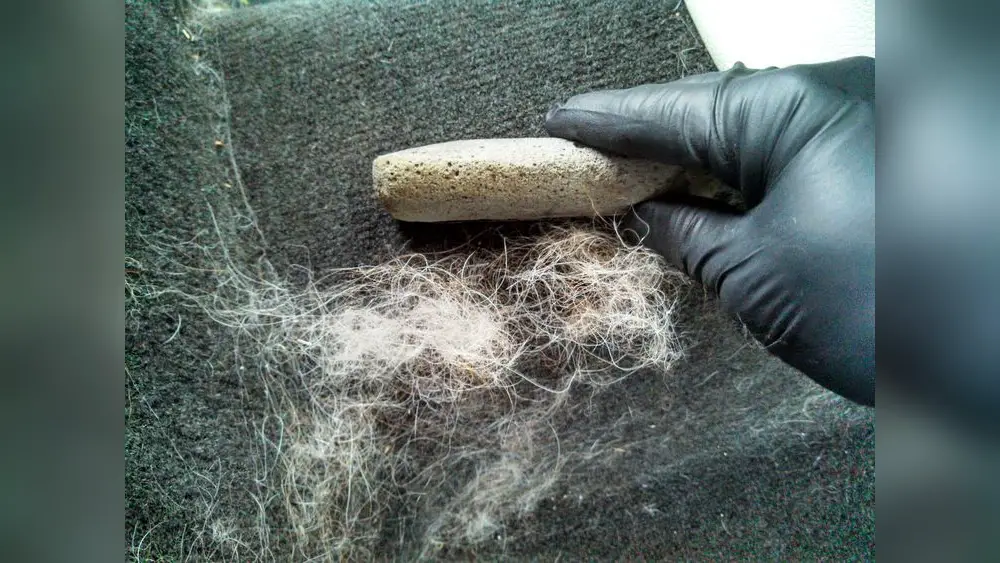
- Pumice stone: Gently rub over carpets and mats. The rough surface grabs and pulls out embedded hair. Be careful—do not use on leather or delicate fabrics.
6. Use Fabric Softener (for Heavy Buildup)
Mix 1 part liquid fabric softener with 3 parts water in a spray bottle. Lightly mist the fabric and let it sit for a few minutes. Fabric softener helps loosen hair from fibers. Wipe with a microfiber cloth, then vacuum again.
Note: Always spot test on a hidden area first. Some fabrics may react differently.
7. Clean Floor Mats Separately
Take mats out and shake them well. Use a rubber brush, pumice stone, or vacuum. For stubborn hair, hose off mats, scrub with a rubber brush, and let them dry before putting them back.
8. Compressed Air For Tight Spots
If hair is trapped in vents, seat tracks, or other tight spaces, a can of compressed air can blow it out. Vacuum after to pick up the loosened hair.
Comparing Common Pet Hair Removal Tools
Choosing the right tool makes a big difference. Here’s a quick look at popular options:
| Tool | Effectiveness | Best For | Average Price (USD) |
|---|---|---|---|
| Rubber Glove | Very Good | Seats, carpets | $5–$10 |
| Pumice Stone | Excellent | Carpets, mats | $6–$12 |
| Lint Roller | Good | Seats, quick touch-ups | $3–$7 |
| Vacuum (with brush) | Very Good | All surfaces | $30–$200 (device) |

Credit: www.youtube.com
Mistakes To Avoid When Removing Pet Hair
Many people work harder than they need to because of simple mistakes. Here’s what to watch for:
- Skipping the dampening step: Trying to remove dry hair increases static and makes the job harder.
- Not using the right attachment: A plain vacuum nozzle doesn’t lift hair as well as a brush or rubber tool.
- Rushing the process: Quick passes with a vacuum won’t get deep-down hair. Slow, overlapping strokes work better.
- Using abrasive tools on leather: Pumice stones and rough brushes can scratch leather or delicate surfaces.
- Ignoring hidden areas: Hair hides under seats, in seatbelt crevices, and along door panels. Move seats back and forth to expose more spots.
Quick Solutions For Busy Pet Owners
If you’re short on time, here are some fast methods to keep pet hair under control:
- Keep a lint roller in your glove box for quick touch-ups after every trip.
- Cover seats with washable blankets or pet covers. Shake them out or wash them weekly.
- Brush your pet before car rides to reduce shedding.
- Vacuum mats regularly—even small, frequent cleanings help stop buildup.
How Often Should You Clean Pet Hair From Your Car?
How often you need to clean depends on your pet and car use. For most owners, a weekly quick clean keeps hair from piling up. Deep cleaning—using all the steps above—every 1–2 months can keep your car looking and smelling fresh.
If you notice allergy symptoms, or if you drive people who are sensitive to pet hair, you may need to clean more often.
Professional Pet Hair Removal: Is It Worth It?
Some car detailers offer pet hair removal as a special service. Prices can range from $40 to over $100, depending on how much hair and the size of your car. Professionals use commercial vacuums, air compressors, and special brushes.
When is it worth paying for this? If you’re selling your car, or if you just can’t get the hair out after many tries, a professional detail can save time and frustration. But for most people, home methods work well with a bit of effort.

Credit: www.killerbrands.co.uk
Diy Solutions Vs. Commercial Products
You don’t always need to buy expensive gadgets to remove pet hair. Many DIY solutions, like rubber gloves, sticky tape, or a simple spray bottle, work just as well as specialty products.
Here’s a comparison between DIY and commercial tools:
| Method | Cost | Time Needed | Effectiveness |
|---|---|---|---|
| Rubber Glove (DIY) | Low | 10–20 minutes | High |
| Lint Roller (DIY) | Low | 5–10 minutes | Medium |
| Pet Hair Removal Brush (Commercial) | Medium | 10–15 minutes | High |
| Vacuum with Brush (Commercial) | High | 15–25 minutes | Very High |
Two Non-obvious Insights For Better Results
Most guides cover the basics, but here are two tips many beginners miss:
- Work in small sections: Focusing on one seat or one floor area at a time lets you see progress and avoids missing spots. It also makes the job feel less overwhelming.
- Neutralize static with a dryer sheet: Lightly rub a dryer sheet over fabric before you start. This reduces static, making it easier to pull up hair. Plus, it leaves a fresh scent.
Preventing Pet Hair Buildup In Your Car
The best way to deal with pet hair is to stop it before it starts. Here’s how:
- Use pet seat covers: These are easy to remove and wash.
- Groom your pet regularly: Brushing your dog or cat before car rides can reduce shedding by up to 90%.
- Keep windows closed when driving: Open windows can blow hair around and make it stick everywhere.
- Clean small messes quickly: Don’t let hair pile up—tackle it as soon as you see it.
Frequently Asked Questions

Credit: www.hagerty.com
What Is The Most Effective Tool For Removing Pet Hair From Car Seats?
A rubber glove or a dedicated pet hair removal brush are both highly effective. The glove creates static and friction, pulling hair from fabric. For deep cleaning, a vacuum with a brush attachment works best.
Can I Use A Pumice Stone On All Car Interiors?
No, only use a pumice stone on tough surfaces like carpeted mats. Avoid using it on leather, vinyl, or delicate fabrics, as it can cause scratches or damage.
How Can I Keep Pet Hair From Sticking To My Car’s Seats?
Use seat covers or blankets and wash them regularly. Brushing your pet before trips also helps. Wiping seats with a dryer sheet before drives can reduce static and help prevent hair from sticking.
How Do I Remove Pet Hair From Car Air Vents And Tight Spaces?
A can of compressed air works well for blowing hair out of vents and cracks. After using compressed air, vacuum the area to pick up the loose hair.
Is There A Way To Make Pet Hair Removal Easier In The Future?
Yes, regular cleaning and prevention make a big difference. Use seat covers, groom your pet often, and keep a lint roller in your car. Treating surfaces with a light mist of fabric softener and wiping with a microfiber cloth can also help hair come off more easily next time.
Removing pet hair from your car takes effort, but it doesn’t have to be a constant battle. With the right tools and a simple routine, you can keep your car looking—and smelling—fresh, even with pets along for the ride. For more tips on pet care and cleaning, check out resources like the ASPCA.