
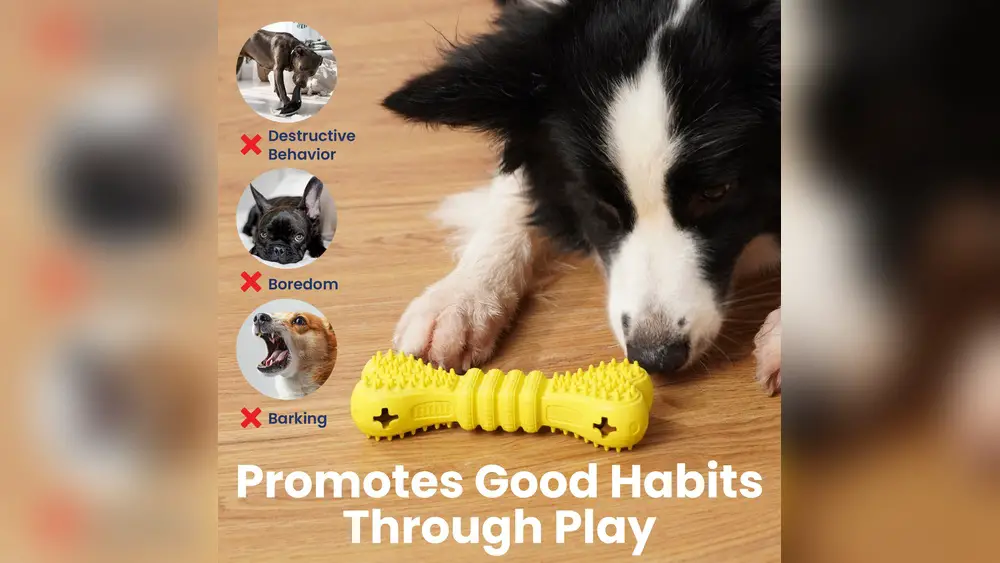
Dog owners know how much trouble a bored or anxious dog can cause. Chewed shoes, shredded pillows, gnawed furniture—these are signs your furry friend needs something better to do. The right chew toy can save your belongings, help your dog feel calmer, and even improve their health.
But with so many options, how do you choose the best dog chew toys to stop destructive behavior?
In this guide, you’ll discover which toys really work, why they matter, and how to match them to your dog’s unique needs. You’ll also get expert tips, important safety advice, and real examples that can make a difference in your daily life with your dog.
Why Dogs Chew—and Why It Becomes Destructive
Chewing is natural for dogs. Puppies chew to relieve teething pain. Adult dogs chew to keep their jaws strong and teeth clean. But when chewing turns destructive, it usually means something is missing from the dog’s life.
Common reasons for destructive chewing:
- Boredom: Dogs left alone for long periods need stimulation.
- Anxiety or stress: Separation anxiety is a big cause.
- Teething: Puppies’ gums hurt as their teeth grow in.
- Lack of training: Dogs don’t always know what’s OK to chew.
- Unmet exercise needs: Energetic breeds need both physical and mental activity.
Insight #1: Many owners think chewing is “bad behavior,” but it’s often a symptom of unmet needs. Addressing the root cause is as important as buying the right toy.
Insight #2: Some dogs develop a preference for certain materials or shapes. If your dog always chews socks, look for toys with a similar feel or size.
What Makes A Good Dog Chew Toy?
Not all chew toys are created equal. Some are too hard and break teeth. Some are too soft and get eaten quickly. Others are unsafe or boring.
Key factors to look for:
- Material safety: Should be non-toxic and free of harmful chemicals.
- Durability: Must withstand your dog’s chewing strength.
- Size and shape: Should match your dog’s mouth and chewing style.
- Appeal: Must be interesting (texture, flavor, smell).
- Cleanability: Easy to wash, especially for toys that touch food.
- Purpose: Some toys clean teeth, others relieve anxiety, and some help with boredom.
Below is a quick comparison of important features when choosing a chew toy:
| Feature | Why It Matters | Examples |
|---|---|---|
| Material | Safe for chewing, won’t break into dangerous bits | Rubber, nylon, rope, edible chews |
| Durability | Lasts longer, saves money, less risk of swallowing pieces | Heavy-duty rubber (KONG), tough nylon (Nylabone) |
| Appeal | Keeps dogs interested, reduces boredom | Flavored, squeaky, treat-dispensing toys |

Credit: tropiclean.com
Top 12 Dog Chew Toys To Stop Destructive Behavior
Finding the right chew toy can feel overwhelming, so here are twelve of the best options, each with strengths and unique features.
1. Kong Classic Dog Toy
The KONG Classic is a legend among dog toys. Made from natural red rubber, it’s tough enough for aggressive chewers but has just enough give to protect teeth. Its hollow center can be filled with treats or peanut butter, making it a puzzle and chew toy in one.
Dogs love the unpredictable bounce, and the toy can keep them busy for hours. KONGs come in multiple sizes, so you can pick the right one for puppies or big chewers.
Practical tip: Freeze a stuffed KONG for longer-lasting fun, especially on hot days.
2. Nylabone Dura Chew
The Nylabone Dura Chew is made from durable nylon, designed for powerful chewers. It comes in different flavors like bacon or chicken, which helps attract dogs who ignore plain rubber toys. The textured surface helps clean teeth and control plaque.
Be sure to choose the right size and type for your dog—Nylabone makes options for puppies, seniors, and aggressive chewers.
Watch out: If the toy gets small enough to swallow or shows sharp edges, replace it immediately.
3. Benebone Real Flavor Wishbone
The Benebone Wishbone is a favorite for dogs who love to gnaw. Made in the USA, it’s shaped so dogs can hold it easily in their paws. It’s infused with real flavors like peanut, chicken, or bacon, making it more appealing than plain plastic.
Unlike edible chews, Benebone is meant for long-term use. It’s durable but not indestructible; heavy chewers may need to replace it more often.
4. West Paw Zogoflex Hurley
The West Paw Zogoflex Hurley is a non-toxic, recyclable chew toy that floats and bounces. It’s gentle enough for puppies but strong enough for most adult dogs. You can put it in the dishwasher for cleaning.
This toy is great for fetch as well as solo chewing. West Paw offers a one-time replacement if your dog manages to destroy it—rare, but possible.
5. Goughnuts Maxx 50 Ring
For the toughest chewers, the Goughnuts Maxx 50 Ring is a top choice. Made from reinforced rubber, it’s designed for safety: if your dog chews through the outer layer and exposes the inner red layer, it’s time for a replacement.
This toy is heavy and firm, so it’s best for large dogs with very strong jaws. It’s not for teething puppies or small breeds.
6. Petstages Dogwood Stick
The Petstages Dogwood Stick combines the flavor of real wood with safe synthetic materials. Many dogs love to chew sticks, but real wood can splinter and harm their mouths or digestive tracts. The Dogwood Stick feels like a stick, smells like one, but won’t splinter.
This toy is especially good for outdoor-loving dogs and comes in several sizes.
7. Outward Hound Invincibles Snake
If your dog loves plush toys but destroys them in minutes, try the Outward Hound Invincibles Snake. It’s made with double layers and special stitching to survive rough play. The “invincible” squeakers keep working even if punctured.
While no plush toy is truly indestructible, this one lasts longer than most and satisfies dogs who want the sound and feel of a softer toy.
8. Chuckit! Ultra Ball
The Chuckit! Ultra Ball is a favorite for dogs who combine chewing with fetch. Made from high-bounce rubber, it’s tougher than tennis balls and doesn’t shred. It floats, too, so it’s great for water-loving breeds.
Be sure to use the right size—smaller balls are a choking hazard for big dogs.
9. Himalayan Dog Chew
This long-lasting edible chew is made from yak and cow milk. The Himalayan Dog Chew is hard, tasty, and takes most dogs a long time to finish. It’s a good choice if you want a treat that won’t be gone in seconds.
It’s digestible, but you should always supervise and remove small pieces to avoid choking.
10. Kong Extreme Goodie Bone
The KONG Extreme Goodie Bone is made from the toughest KONG rubber. Shaped like a bone with holes on each end, you can stuff it with treats or peanut butter. It’s perfect for dogs who need a tough, interactive toy.
Because of the shape, dogs can hold it easily and chew from all angles.
11. Mammoth Flossy Chews Cottonblend Rope
Rope toys like the Mammoth Flossy Chews are great for tug-of-war, fetching, and solo chewing. The cotton fibers help clean teeth as your dog chews. They’re not as durable as rubber, but many dogs love the texture.
Always check for loose strings and remove the toy if it starts to unravel.
12. Jw Pet Hol-ee Roller
The JW Pet Hol-ee Roller looks simple but is surprisingly versatile. It’s a rubber ball with holes, making it easy to grab and carry. You can stuff it with treats, use it for fetch, or even play gentle tug.
It’s softer than many chew toys, so it’s best for light to moderate chewers.
Matching Chew Toys To Your Dog’s Personality
Every dog is different. What works for your neighbor’s bulldog might not interest your golden retriever. Matching the toy to your dog’s chewing style and preferences is the key to stopping destructive behavior.
For Heavy Chewers
- Choose tough rubber (KONG Extreme, Goughnuts)
- Avoid plush and rope unless labeled “indestructible”
For Puppies And Seniors
- Pick softer rubber or puppy-specific toys (KONG Puppy, softer Nylabone)
- Avoid hard bones or antlers that can damage teeth
For Boredom And Anxiety
- Use treat-dispensing or puzzle toys (KONG Classic, Hol-ee Roller)
- Change toys every few days to keep things interesting
For Dental Health
- Textured toys (Nylabone, Benebone, rope toys) help clean teeth
- Supervise edible chews to prevent swallowing large pieces
Example: If your Labrador chews through everything, try a Goughnuts ring or a large KONG Extreme. For a teething puppy, a soft rubber KONG or puppy Nylabone is safer.

Credit: www.amazon.sa
Safety Tips For Chew Toys
Safety should always come first. Even the best toy can be risky if not used correctly.
- Supervise your dog, especially with new toys or edible chews.
- Replace toys when they become small enough to swallow or show deep cracks.
- Avoid toys with sharp edges or pieces that break off easily.
- Size up: Always choose a size larger if you’re unsure.
- Clean toys regularly to prevent bacteria buildup.
Insider tip: Check your dog’s gums and teeth regularly. If you see bleeding, chips, or swelling, switch to a softer toy and talk to your vet.
Real Data: Chew Toy Satisfaction And Effectiveness
Surveys from dog owners and trainers show that chew toys can reduce destructive behavior by up to 60% when used consistently. Dogs who receive new chew toys every week show less anxiety and are less likely to chew furniture.
Here’s a look at owner satisfaction for some popular chew toys:
| Chew Toy | Owner Satisfaction (%) | Average Duration Before Replacement |
|---|---|---|
| KONG Classic | 92 | 6-12 months |
| Nylabone Dura Chew | 87 | 4-8 months |
| Goughnuts Maxx 50 Ring | 94 | 12+ months |
| Petstages Dogwood Stick | 83 | 2-4 months |
Note: These numbers come from owner reviews and surveys. Lifespan depends on your dog’s chewing habits.
Common Mistakes When Choosing Chew Toys
Many owners waste money or risk their dog’s health by making simple mistakes:
- Buying toys that are too small. This is a choking hazard.
- Ignoring the dog’s chewing style. Soft toys for hard chewers get destroyed fast.
- Choosing unsafe materials. Cheap plastic or toys with toxic dyes are dangerous.
- Not rotating toys. Dogs get bored with the same toys every day.
- Leaving toys unsupervised. Especially with puppies or aggressive chewers, supervision prevents accidents.
A good practice is to have a rotation of 4-5 different types of chew toys and change them every few days.
Alternatives To Chew Toys
While chew toys are effective, they’re just one part of solving destructive chewing. Combine toys with other strategies for best results.
- Exercise: A tired dog is less likely to chew out of boredom.
- Training: Teach “leave it” and reward chewing on the right items.
- Mental games: Puzzle feeders, hide-and-seek, and scent work keep dogs busy.
- Safe chews: Bully sticks, antlers, and edible dental chews can be added, but always supervise.
If chewing is linked to anxiety, consider talking to a trainer or vet for extra support.

Credit: www.aspca.org
How To Introduce Chew Toys To Your Dog
Some dogs ignore new toys. Here’s how to get them interested:
- Add food: Stuff toys with treats or smear with peanut butter.
- Play together: Toss or roll the toy to start a game.
- Praise use: Give treats or attention when your dog chews the toy.
- Limit access: Rotate toys so each one stays “new” and exciting.
If your dog still ignores chew toys, try different textures or flavors. Dogs have preferences—experiment to find what works.
Cleaning And Caring For Chew Toys
Dirty toys can make dogs sick or spread bacteria. Here’s how to keep them clean:
- Rubber and plastic: Wash with hot, soapy water or put in the dishwasher (check label).
- Rope toys: Soak in water and microwave for 1 minute to kill bacteria.
- Edible chews: Discard after use or if they become small.
- Plush toys: Wash in the machine if safe, but air dry to avoid shrinking.
Check toys regularly for signs of wear and replace as needed.
When To See A Vet About Chewing
Chewing is normal, but sometimes it signals a bigger problem:
- Sudden increase in chewing (especially in adults)
- Chewing only one area of the body (could be pain or allergy)
- Broken teeth or bleeding gums
- Obsessive chewing that causes injury
If you notice any of these signs, talk to your veterinarian. They can rule out medical issues and help with training or anxiety.
For more on why dogs chew and how to redirect the behavior, visit the VCA Animal Hospitals guide.
Frequently Asked Questions
Why Does My Dog Chew Everything When Left Alone?
Dogs often chew out of boredom or separation anxiety. Chew toys give them a safe outlet and help prevent them from chewing furniture or shoes. Make sure your dog gets enough exercise and mental stimulation before leaving them alone.
Are Rawhide Chews Safe For Dogs?
Rawhide chews can cause digestive issues or choking if swallowed in large pieces. Many vets now recommend safer alternatives like rubber toys, nylon bones, or edible chews made from natural ingredients.
How Do I Know If A Chew Toy Is Safe?
Look for toys made from non-toxic materials with no small parts that can be swallowed. Choose the right size and check for sharp edges or deep cracks. Supervise your dog with new toys until you’re sure they’re safe.
What Should I Do If My Dog Swallows A Piece Of A Chew Toy?
If your dog swallows a small piece, watch for vomiting, choking, or signs of pain. If the piece is large or your dog seems sick, contact your vet immediately. Always replace toys that are breaking apart.
How Often Should I Replace My Dog’s Chew Toys?
Replace chew toys when they become small enough to swallow, have sharp edges, or show deep cracks. For heavy chewers, this might be every few months. Check toys weekly to keep your dog safe.
Final Thoughts
The right chew toy can transform your dog’s behavior and protect your home. It’s not just about buying something tough—it’s about matching the toy to your dog’s chewing habits, rotating toys to keep things fresh, and always putting safety first.
Remember, chew toys are a tool, not a magic fix. Combine them with exercise, training, and attention to give your dog a happier, healthier life. When you choose wisely, you’ll stop destructive behavior and build a stronger bond with your best friend.